e-Receipts: What They Are and Why You Should Use Them
e-Receipts replace paper slips with digital records. Learn what they are, their benefits, and why managing them properly makes them truly useful.
It is common to get a receipt after a transaction is done. It could be a gas purchase, a grocery shop, an online order or a service payment. The receipt is, unfortunately, printed on a slip of paper that is impossible to keep track of because it will eventually fade, be mislaid, or be thrown away. This problem is exacerbated by the fact that the paper receipts keep piling up and are difficult to dispose of.
It is no surprise that many retailers are now offering e-receipts as an option instead of paper receipts. Customers often receive e-receipts without thinking about how many they receive. Although it is normal to receive e-receipts, most consumers do not understand the concept of e-receipts or why e-receipts could be better in certain situations.
What is an e-receipt?
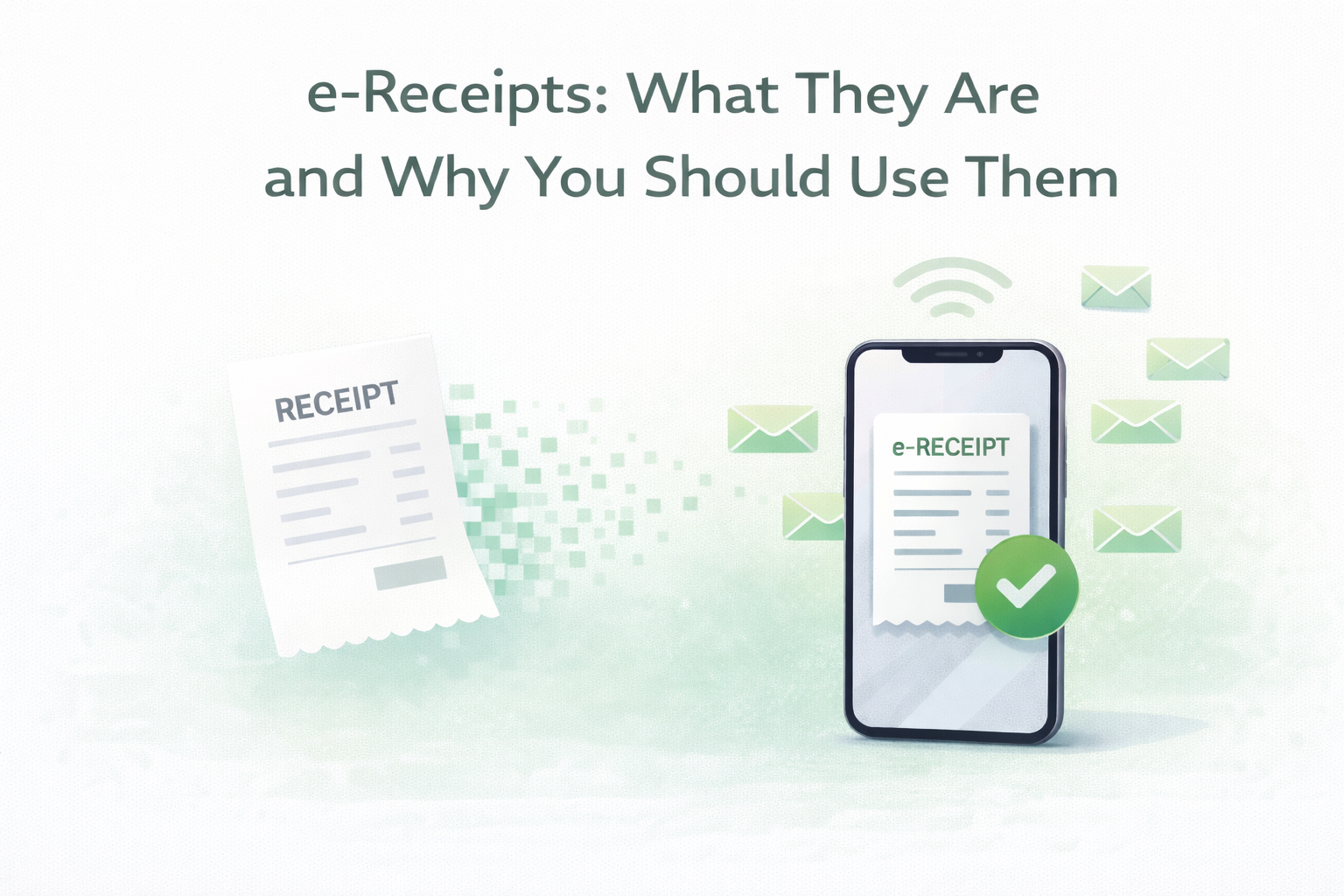
E-receipts are receipts that are sent electronically. When a consumer gets an e-receipt, they receive the same information as is on the paper receipt, including the confirmation of payment, purchase information, the date of the transaction and the amount of money that was transacted; however, instead of printing it, it is sent via email or text. In addition, because e-receipts do not rely on paper or other physical materials, they are removed from the consumer's physical attention so they are not kept, thrown away, or stored in a box. E-receipts serve the same function as other receipts: documenting purchases. The difference with e-receipts is how they are delivered, stored, and maintained over time.
Common Places Where Consumers Receive e-Receipts
Most consumers do receive e-receipts, whether they are aware of this or not.
The most obvious example of receiving an e-receipt is with online shopping. When you buy something on an e-commerce platform, an e-receipt is sent to your email or is stored in your account dashboard as an order confirmation. In grocery or retail shops, e-receipts are now frequently an available option at checkout. E-receipts can also be received with digital bills and receipts in services like internet, mobile and utility companies.
E-receipts are also largely used in travel bookings, fuel payment, subscriptions and app-based services. E-receipts are indeed embedded in everyday activities. The real challenge is to manage the receipts in such a way that they become useful at a later point.
The Practicality Behind e-Receipts Adoption by Businesses
The shift towards e-receipts in most businesses is due to practical reasons. The printing of paper receipts involves the use of paper, ink or thermal printing materials, and printers and these require maintenance. The expenses incurred on these materials over time can be quite significant. Businesses benefit by streamlining their checkout process, reducing printing costs, and eliminating paper and printer issues by offering digital receipts. In addition, customers commonly experience quicker checkouts and less paper wastage.
Customers appreciate the ease digital receipts provide since they do not tear, fade, or disappear as paper receipts do. This is especially beneficial when you need the receipt, and the store you purchased from won't accept digital receipts.
Digital receipts provide numerous advantages for daily, practical use in everyday life. Unlike paper receipts, they do not fade or become unreadable over time. As long as they are stored properly, they can remain clear and unreadable for an extended period of time.
Purchasing paper reduces overall organizational clutter. While preparing for rainy days, digital receipts are far more organized. Instead of bearing the physical weight of receipts in your car, digital receipts are far more practical. I.,\, Wrapping paper, digital receipts are far more easily accessed, organized and practical for everyday use. The Environmental Effects of e-Receipts
The impact of e-receipts results in less dependence on printed versions. As a result, less paper is used. The average paper receipt is printed and discarded. The average period of time receipts are used is about 5 seconds. Paper is also used for printing and disposing of it as environmental waste.
Elimination of e-receipts is not a major change in one's lifestyle, as it is a substitution of a physical, potentially disposable, item for a digital format. The average e-receipt will never be printed on paper, and therefore will never be used as a piece of paper to contribute to waste.
The environmental impact of e-receipts may not be significant, but it will result in a change of irresponsible consumer behaviour, negligent waste and will prevent paper usage by a minimal amount.
Environmental Impact of Using e-Receipts
The challenges of e-receipts can be categorized into fragmentation and digital clutter.
Fragmentation is the multiple sources of e-receipts, which can be email, text, or an online receipt storage account. The longer e-receipts are held and not organized, the more fragmented and cluttered their storage location becomes.
Digital clutter is also a problem. Searching for an e-receipt months or years after it was received can result in frustration. Email inbox searches will be complicated by hundreds or more emails on various subjects. Attachments to receipts can and will be less identifiable.
This is an example of e-receipts without a system, to illustrate why disorganized e-receipts are an issue, the same as the paper receipts problem. E-Receipts should still be managed.
While they may be useful in the moment, digital receipts will become useless unless they can be easily referenced in the future.
To maintain them for the long term, an e-receipt must be stored and managed in the same manner as any other digital file. Without this, the digital receipt will become lost, deleted, or buried among other digital information.
Managing e-receipts provides a way for them and the records they represent to be permanent, as opposed to the e-receipts being a temporary file.
How e-Receipts Complement a Modern Paperless Lifestyle
A paperless lifestyle is becoming the norm as a result of digital payments, online banking, and e-billing. e-Receipts complement this lifestyle seamlessly, or perhaps a little too easily.
They shift the burden of record-keeping away from the consumer and eliminate the need for the consumer to use physical storage.
For the majority, e-receipts require the least effort in order to adopt a paperless lifestyle, as it creates a shift in a consumer's record-keeping and payment habits without affecting the way they shop.
Where AMRIOP Fits In
While e-Receipts eliminate the issue of paper, they don't address the issue of organization. This is where AMRIOP fits in.
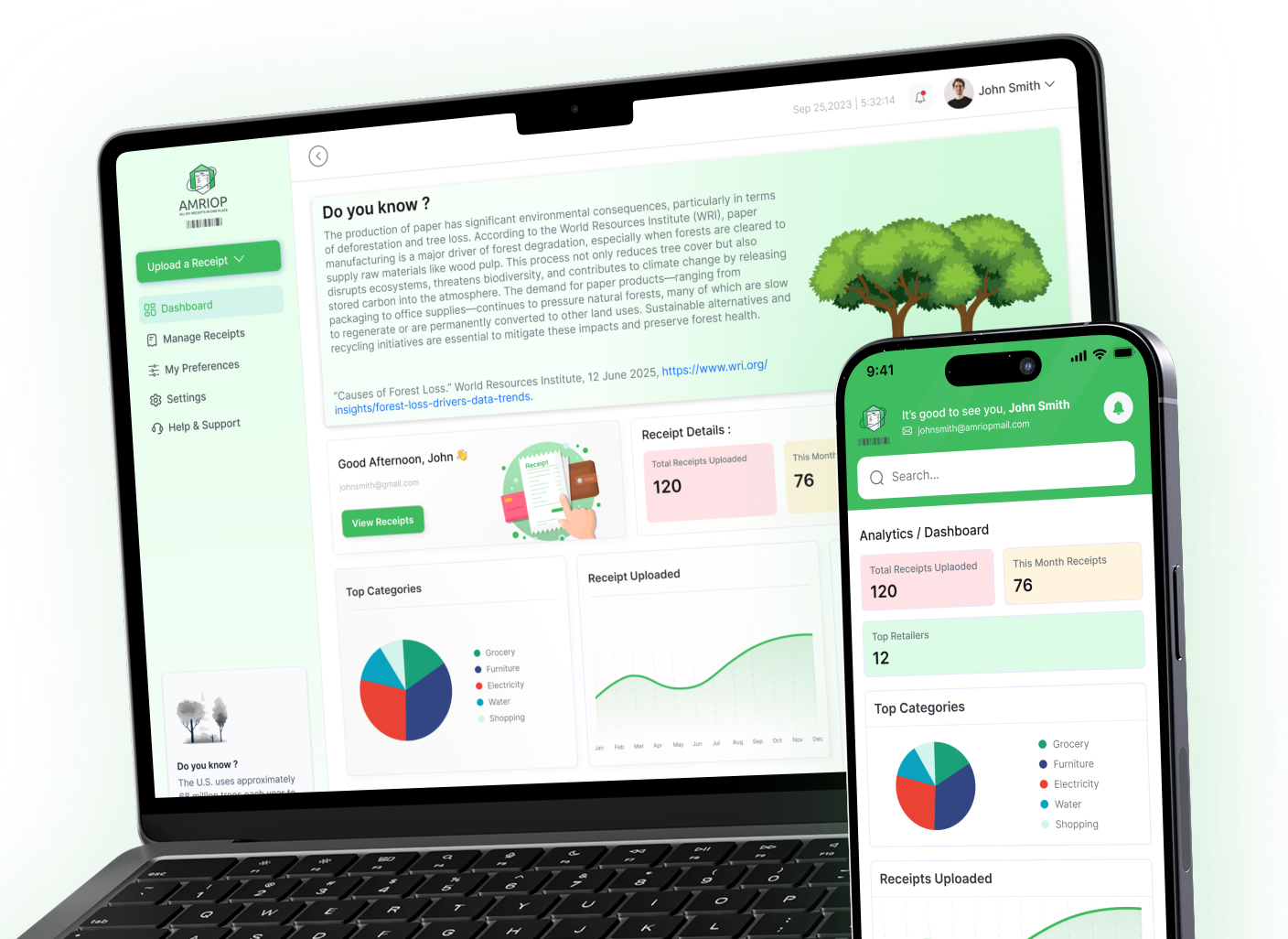
AMRIOP enables its users to manage both digital receipts and physical receipts scanned through the AMRIOP app. Users no longer have to worry about receiving their e-receipts in their different email accounts and text message threads. Instead, they can simply access their receipts through the AMRIOP app.
AMRIOP promotes users to be more organized and to adhere to a more sustainable, paperless lifestyle. This also promotes the long-term utility of e-receipts.
When e-Receipts Are Most Useful
Numerous circumstances demonstrate the importance of having e-receipts.
Proof of purchase for returns and exchanges is required. Warranty and service claims documentation also need to be accurate. Accessible records to reference previous purchases or expenses are easier when they are digital. All of these instances contribute to digital e-receipts.
Simplicity Provided by E-Receipts
Everyday transactions are now considered a part of e-receipts, which will decline paper usage, be readable for the consumers for a prolonged period of time, and e-receipts will promote the consumers to be more responsible.
However, the most important feature of e-receipts is the management of e-receipts for the consumer. e-Receipts that have not been organized are just as disordered as a paper receipt. Through the proper management of e-receipts, they can simplify and add value by providing accurate records.
For consumers, the practicality of e-receipts cannot be understated. They take little effort to use, benefit consumers in many tangible ways, and align seamlessly with today's digital lifestyle.
Related Blogs
View all the related blogs from here
How to Go Paperless at Home: Receipts, Bills, and Documents...
Stop drowning in paper clutter. Learn how to digitize your receipts, bills, and documents at home — and keep them organized for good.
 Uploaded on 30 Apr 2026
How to Store Your Digital Receipts So They’re Secure and...
Learn how to store digital receipts safely, organize them properly, and keep purchase records accessible for returns, warranties, and taxes.
Uploaded on 03 Mar 2026
What Is Receipt Management? Definition, Importance, and Best Practices
Receipt management is the practice of organizing paper and digital receipts so they remain accessible for returns, warranties, taxes, and everyday financial cla...
Uploaded on 26 Feb 2026
Start Your Paperless Journey
At Amriop, we’re more than an invoice management software, we’re building a smarter, more sustainable way to handle digital receipts. Whether you want to manage eReceipts more efficiently, adopt electronic receipts to reduce waste, or use secure digital receipt storage, Amriop offers a receipt organizer and receipt management system designed for everyone.
Go Paperless Now