How to Keep Track of Receipts Without Losing Them (Complete Guide)
Learn how to keep track of receipts, organize them efficiently, and avoid losing important records for returns, warranties, and expense tracking.
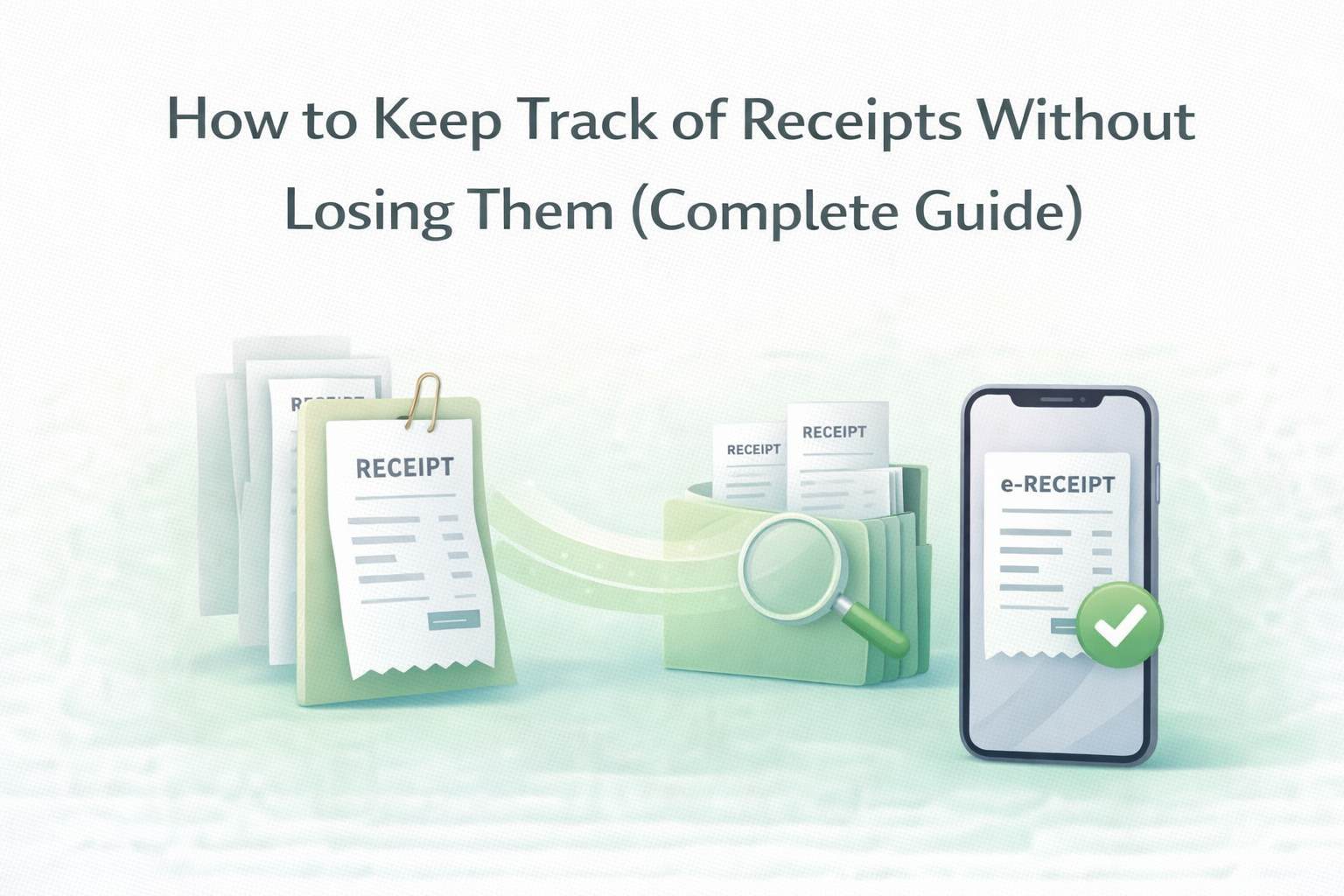
Introduction: Why Receipts Get Lost So Easily
Receipts are a mundane but essential part of everyday transactions. Be it a grocery bill, online order, fuel payment or the service payments made for any kind of repair job, receipts serve as proof of purchase and a spending record. However, despite the nature of what they are, most do not manage them deliberately.
Rather, these paper receipts are crammed in wallets, drawers or bags and can build up with no set organization. Digital receipts, by contrast, are lost in email inboxes, messages and cloud folders. Initially, that does not seem like a problem. Everything is within reach, until that receipt needed urgently comes due.
That moment is often accompanied by pressure. A return request, a warranty claim or an expense reimbursement suddenly needs a receipt that cannot be produced quickly. What should take a matter of seconds becomes an infuriating game of find that burdened character.
Staying on top of receipts isn’t complicated. It’s about having an easy system that ensures this kind of scenario doesn’t come to pass.
Why Keeping Track of Receipts Actually Matters
For example, you may overlook the significance of receipts as you receive them when you're paying for something, but once you find yourself topsy-turvy in real-life situations, such receipts will start making sense.
Many merchants will ask for some form of proof of purchase (e.g. a receipt) when making returns and exchanges. Without it, even valid returns might be rejected. Likewise, warranty claims rely on receipts to determine when a product was purchased. This is particularly crucial for electronics, appliances and other high-value products.
Receipts not only help in financial consciousness. Organized properly they give a clear picture of spending habits over time. This is vitally important not just for people with a personal budget but also for freelancers and other professionals who need to monitor their expenses for reporting or reimbursement.
Receipts are also usually required for tax purposes. It makes documenting easier and relieves financial review stress.
Small tasks become avoided and unnecessarily complex when receipts get lost or are difficult to access. It is easy to lose receipts and important documents in mundane business activities. A simple receipt tracking system provides early solving of such situations, as it ensures that relevant documents are always available when needed.
Common Ways People Lose Receipts
The vast majority of receipt issues are due to too little structure, not too little effort.
Paper receipts are easily misplaced. They can be folded, damaged or lost in everyday clutter. They fade away over time, particularly when printed on thermal paper, so are not reliable for the long game.
Digital receipts present a different type of problem. They often get buried in email inboxes, among promotional emails and alerts. If left disorganized, they become hard to find later.
Another common issue is fragmentation. Some receipts you keep in emails, some in cloud folders and others as a photo on your phone. Finding the right receipt takes time when records are scattered between different platforms.
Consider a real-life situation. You are at the counter of a store attempting to refund some goods. The clerk asks for the receipt. People are waiting behind you as you start to search your inbox. Even when the receipt is there, finding it fast becomes a problem. This is where bad receipt organization shows up.
Paper vs Digital Receipt Tracking
Paper receipts and digital ones need to be organized, but come with different challenges.
Paper Receipt Tracking
Paper receipts require physical storage. They build up over time — in folders, envelopes or drawers. They are not easy to handle, particularly when looking up a particular document. There have been advances in ink as well as alternative printing methods, but these also deteriorate over time quite quickly.
Digital Receipt Tracking
Digital receipts spare physical mess but create digital mess. In the absence of a system, receipts languish unread in inboxes or become lost across platforms. Although email search can assist in this effort, it is not viable long-term organization.
To make digital receipt tracking more efficient than paper-based tracking, it is important to implement a clear process.
How to Keep All of Your Receipts Organized (With Step by Step Guidelines)
It does not take complex tools to track receipts. It takes a few regular habits.
1. Capture Receipts Immediately
Do not delay. Immediately determine what you will do with the receipt. Keep paper receipts in a safe place or digitize them. Digital receipts should be on file — not in the inbox.
2. Digitize Paper Receipts
This process converts paper copy receipts into a digital electronic format that is easier to store and access. This also safeguards from fading, damage, or loss.
3. Store Receipts in One Place
Do not scatter receipts on different platforms. A centralized system collects all the records in one place, saving time and avoiding confusion.
4. Categorize Receipts Consistently
Divide receipts into categories, such as groceries, travel, utilities or electronics. You may also filter by date or vendor. The method is irrelevant; as long as you seem it consistently.
5. Keep Records Clear and Complete
Make sure receipts are legible and contain all of the required information. Such records with incomplete or unclear details are not as useful.
6. Review and Clean Up Regularly
Occasionally, you might end up with duplicate or unneeded receipts. Regular review maintains clarity and keeps the system in check.
Step by Step Guide to Properly Organize Digital Receipts
Digital receipts are more than just a storage proposition. They require structure.
A well-known trap is to fall back on email inboxes exclusively. And while diva in the short run, inboxes aren’t meant for keeping our stuff organized forever. Emails are buried, subject lines differ, and attachments may not be labelled clearly.
Folders can help, but having too many folders without organization can get confusing. Instead, the better way to work is to maintain a simple and consistent structure that allows quick retrieval.
Centralization is key. Having digital receipts collected into one organized system makes them significantly easier to manage and access as time goes on.
How To Track Expenses: Receipts
However, it serves a purpose beyond documentation; receipts are also useful in the creation of an expenses tracker.
Categorization and review of receipts, on the other hand, gives an insight into spending trends. It also teaches people about their spending habits and where they should cut back.
For professionals and freelancers, receipt tracking makes it easy to report expenses and manage your finances. There is no need to look for records at the last moment; everything is arranged.
Making sense of receipts turns regular purchases into meaningful financial data.
Common Mistakes to Avoid
There are some mistakes that can make receipt tracking ineffective, even with the best intentions.
Other people put off organizing receipts because they think they will do it later. It causes accumulation and confusion. Some depend solely on email search, which eventually fails you.
A second common problem is overcomplicating the system. Generating excessive folders or rules can render the process difficult to sustain.
There’s also the risk of not being backed up. Important receipts shouldn’t rely on one device or account.
The important thing is to make the system simple, uniform and easy to follow.
You want to know how you can easily and consistently track your receipts.
Making Receipt Tracking Simple and Consistent
The best receipt tracking systems are not the most complex. They are the one that continuously followed.
A simple habit done consistently works better than a complex system applied periodically. We want to work less hard while still being guided.
Organizing receipts, statements and invoices helps in creating an entire log of purchase history that can be referenced whenever needed.
Structured Receipt Management Systems
Manual approaches can be useful for a while, though they tend to become unwieldy the more receipts you need to handle.
That’s where structured receipt management systems come into play. They offer a standardized and unified method of storing and handling receipts rather than using piled-up emails or folders. Fortunately, such solutions are not hard to find.
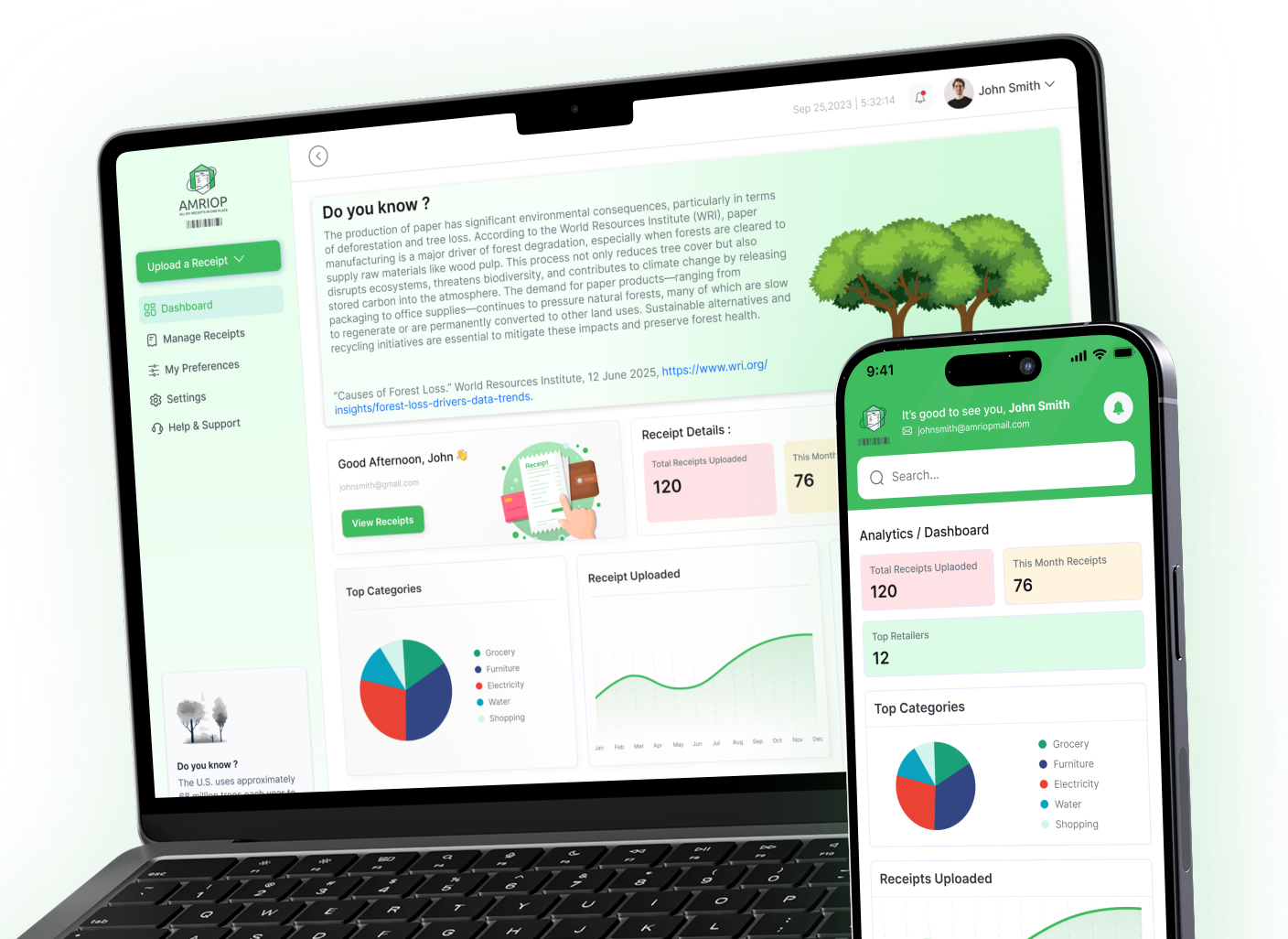
Services such as AMRIOP are meant to complement this method, allowing for the collection of digital and scanned receipts in one unified web platform instead of waiting until the tax deadline for added stress.
Not just a place for storage, the emphasis is on clear and consistent.
Conclusion: Receipts Are Tiny, But Losing Them Is Not
Receipts might sound small, but they are so important when you need them and don’t have one.
Shows receipts may cause panic, delays and lost opportunities. The headaches of incorrect deductions, tedious data entry and overwhelmed shoe boxes can be avoided altogether with a straightforward system for tracking and organizing receipts.
This helps to ensure that both immediate receipts and those for long-term use are correctly stored and can be referenced whenever needed.
Tracking receipts is not a question of effort. It is about a system that actually works.
Disclaimer: This article and AMRIOP provide general organizational tools and information for managing receipts. They do not constitute financial, tax, or legal advice. Results may vary depending on individual use and circumstances.
Frequently Asked Questions
1. What is the best way to keep track of receipts?
The best way to keep track of receipts is to capture them immediately, digitize paper receipts, store everything in one centralized system, and categorize them consistently. Regular review helps ensure receipts remain organized and easy to find when needed.
2. Is it better to keep paper or digital receipts?
Digital receipts are generally better because they do not fade, take up physical space, and are easier to store and retrieve. However, they still require proper organization to remain useful over time.
3. How do I organize receipts for expenses?
You can organize receipts for expenses by categorizing them into groups such as groceries, travel, utilities, and shopping, and storing them in one structured location. Consistent categorization and regular review make it easier to track and analyze spending.
Related Blogs
View all the related blogs from here
Managing Receipts for Warranty Claims and Returns
Missing a receipt can cost you a warranty or return. Here's how to organize and store receipts digitally so you're always covered when it matters most.
 Uploaded on 30 Apr 2026

How to Manage Receipts for Small Business Owners: The Complete...
Learn how to manage receipts for small business, organize digital and paper records, and build a simple system for accurate tracking and compliance.
Uploaded on 21 Apr 2026
How to Track Your Expenses Using Digital Receipts (Simple and...
Learn how to track expenses using digital receipts, organize your spending, and gain better financial clarity with a simple, practical approach.
Uploaded on 17 Apr 2026
Start Your Paperless Journey
At Amriop, we’re more than an invoice management software, we’re building a smarter, more sustainable way to handle digital receipts. Whether you want to manage eReceipts more efficiently, adopt electronic receipts to reduce waste, or use secure digital receipt storage, Amriop offers a receipt organizer and receipt management system designed for everyone.
Go Paperless Now