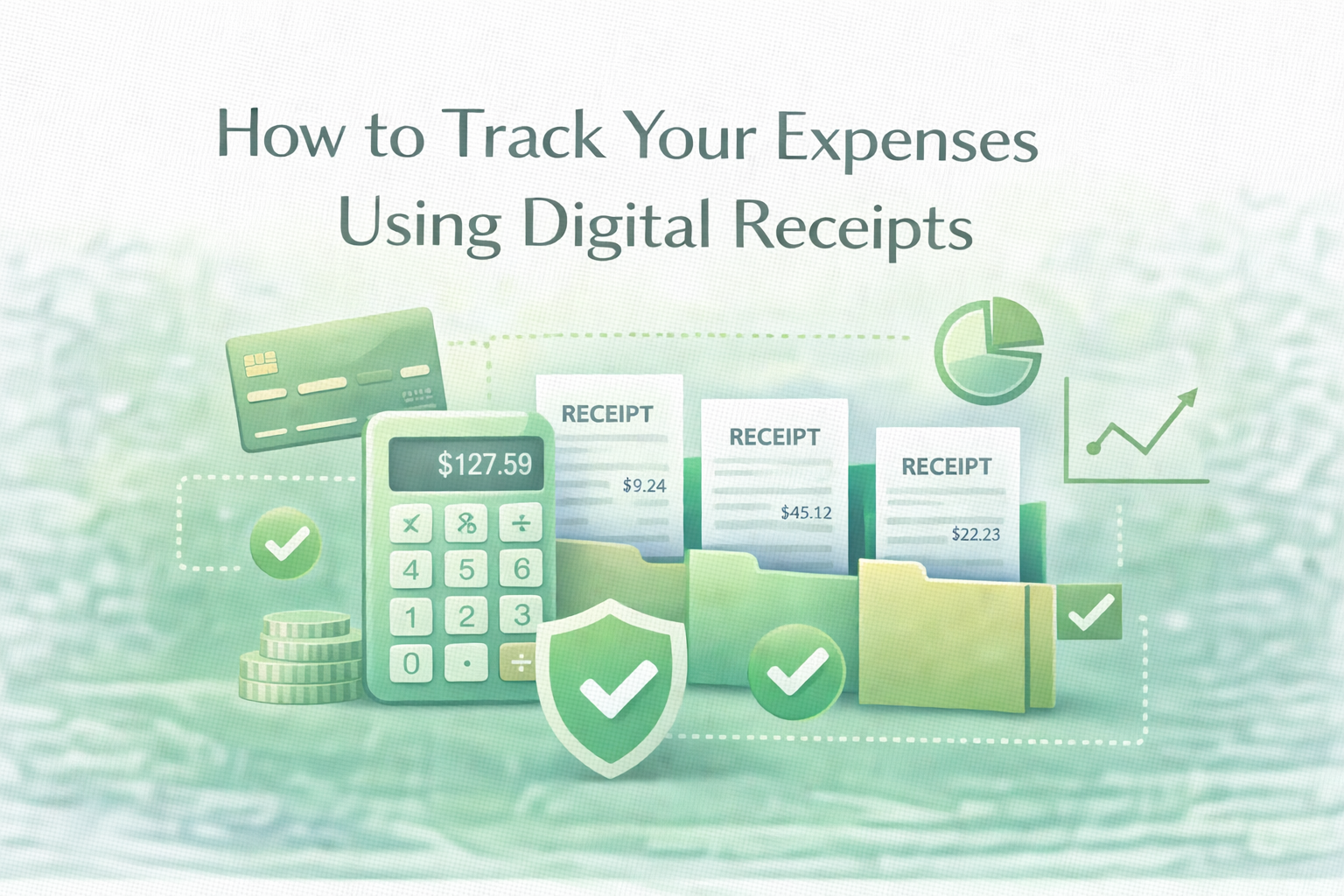
How to Track Your Expenses Using Digital Receipts (Simple and Practical Guide)
Learn how to track expenses using digital receipts, organize your spending, and gain better financial clarity with a simple, practical approach.
Introduction: Why Expense Tracking Fails for Most People
The desire to track expenses is in the 27% range, yet only a handful of people sustain this behaviour. It often starts with motivation. You download a budgeting app, open up a spreadsheet or just plan out a whole system. For a few days or a few weeks, all seems manageable. And then little by little, the effort dies away and you stop counting.
The issue isn’t a failure of intent. It is the method.
Manual tracking requires discipline. All expenses need to be recorded, categorized and reviewed regularly. In real life, this is hard to maintain. Small purchases are forgotten, some entries are skipped and sooner or later the data becomes incomplete and unreliable.
But there is one thing that most individuals already possess but don’t really know how to use: receipts.
Every transaction generates a record. Digital receipts are especially accurate and detailed regarding purchases. When used appropriately, they can create the backbone of a simple to set up and trust worthy expense tracking system.
What Is Digital Receipt-Based Expense Tracking?
Tracking your spending based on digital receipts is the process of using electronic receipts, such as those found in bookkeeping tools like TipList as your only source of financial records to track and analyze spending.
This method is based on receipts already being produced upon transactions, rather than inputting the expense. These include relevant details including the amount of money you spent, date, vendor and type of purchase.
There is a critical difference between remembering expenses/recording expenses/tracking expenses.
Memory, on which remembering depends, is often unreliable.
Capture (Manual data entry) – This is a lot of hard work and discipline.
Tracking uses existing records to create an honest picture of spending.
Digital receipts are more handy for tracking since they store the data upon creation without involving any extra steps.
Why Digital Receipts Are Better for Tracking Expenses
These are some extra benefits that digital receipts have over the traditional expense tracking methods.
They are automatically generated. When a transaction is made, it automatically creates document of the transaction digitally with no additional steps needed. Such automated data parsing eliminate the need for manual input with reduced chances of missing any input.
They provide accurate information. You have the full amount in detail, date and transaction time with a digital receipt, unlike memory-based tracking. This enhances the accuracy of expense tracking.
They are simpler to archive and retrieve. Digital receipts do not have the constraints of being filed physically; they can be stored, searchable and accessed anytime. Which makes tracking over the years easier.
Unlike manual tracking apps, which rely on consistent user input, digital receipts are a reliable source of truth. They provide better accuracy with less effort.
Common Problems in Expense Tracking
Even with digital receipts, tracking your expenses is still difficult for most people.
Inconsistency is one of the major issues. You get receipts but do not store them. Some sit in email inboxes, some are saved randomly, while many are completely ignored.
Another problem is fragmentation. Receipts are spread out across various platforms, which makes it challenging to build a comprehensive overview of spending.
The absence of categorization also impairs applicability. Even when receipts are available, they are not structured for useful analysis.
Consider a common situation. You try to calculate how much you spent at the end of the month. You check your bank account, scroll through emails and attempt to reassemble transactions. Some costs are excluded, others are nebulous, and the total seems wrong.
The problem is not a lack of data. It is the lack of structure.
How to Track Expenses Using Digital Receipts (Step-by-Step)
Following a digital receipt strategy makes expense tracking easier.
1. Capture All Digital Receipts
Make sure every transaction prints a receipt and that it is stored. It can be in regard to online purchases, subscriptions, service payments, all types of tickets.
When checking out a paper receipt, digitize it using either a scanner or clear phone photograph.
2. Centralize Receipts in One Place
Don’t have receipts scattered over a ton of platforms. Having them all in one place is a much more efficient way of managing and accessing all records.
Centralization is key to building a holistic and accurate view of spend.
3. Categorize Each Expense
Set categories for receipts depending on the category of his expense. Grouping similar transactions helps you see where your dollars end up.
Expense tracking becomes meaningful through categorization.
4. Assign a Time Frame
Tracking is much more meaningful when it is time bound. Depending on your use, you can look at expenses weekly, monthly or quarterly.
This aids in detecting patterns and trends across time.
5. Review Spending Patterns
That way you can see where your money is going by regularly reviewing receipts. You can observe what you spend repeatedly, frivolously and where corrections can happen.
6. Maintain Consistency
Results will improve over time, better to be consistent rather than perfect. A simple system that is done consistently will always outperform a complex system that is done intermittently.
How to Categorize Expenses Effectively
Categorization makes receipt-based tracking useful. Without it, receipts become only records and not insights.
Examples include groceries, utilities, travel, subscriptions, health care and shopping. These categories can be straightforward and pertinent to your life.
Some might argue that overly complicated categories will result in a system that is hard to maintain. Fewer, broader categories that can be consistently applied are better.
Properly categorizing receipts makes for easier spending analysis and pattern identification.
Turning Receipts into Spending Insights
Returns are part of the transactional experience. My notes, when properly organized and reviewed, offer real data about financial behavior.
They help identify spending patterns. You can also see how much is spent across categories over time.
They reveal unnecessary expenses. Subscriptions, impulse purchases or habit-based consumption all become more obvious.
They support better decision-making. Clear data makes it easier to tweak spending and plan for future expenses.
Most people are not financially illiterate. They lack structured data. Receipts, when they are used appropriately, capture that data.
Common Mistakes to Avoid
Some errors can harm the efficacy, even of a good system.
Small expenses are often the most overlooked. Small monthly splurges compound over time and should not be forgotten.
Delaying organization leads to clutter. Receipts should be instantly captured and stored.
It is inadequate to consider only the bank statements. Statements display transactions but usually don’t provide much context.
Complexity problems the system, it is more complex to maintain. Simplicity ensures consistency.
Steering clear of these mistakes keeps the system effective and sustainable.
Digital Receipts Without Organization Still Fail
Going digital with receipts doesn’t automatically solve the expense-tacking issue.
Without organization, digital receipts get misplaced and are hard to leverage. Email inboxes get cluttered, files are lost and critical records become difficult to find.
Digital does not equal structure. Without a system, the same issues that plague paper receipts just reappear in an alternate format.
The receipt method is only half the communications needed; tracking through to final resolution also depends on how receipts are filed.
Structured Digital Receipt Tracking Systems
As the monthly receipts grow, manual organization becomes less and less sustainable. This is where structured systems become particularly useful.
A centralized approach ensures receipts are not lost across time. Rather than having separate platforms, everything is in one place.
Digital receipt management platforms like AMRI0P are built to assist in this approach by allowing users to organize and follow their receipts uniformly and fairly without relying on inbox searches or manual sifting through hundreds of emails.
They're not just the end of storage, but of making things clear and useful.
Making Expense Tracking a Habit
Any tracking system is as good as the habit it creates.
And, a simple routine, followed consistently is better than an elaborate system used sporadically. Taking a little time periodically to go through receipts and spending will help immensely.
Tracking should feel positive, not stressful. Maintaining a simple process is more manageable as time goes on.
Conclusion: Better Tracking Starts with Better Records
It will not need sophisticated tools, and it does not require continuous efforts. Receipts already have data — it is all there.
The alternative is to photograph each receipt; organize for them externally, and review every few days.
Digital receipts provide accuracy. Structure provides clarity. Combined they make up a practical and workable method of managing day-to-day expenditure.
Better tracking starts with better records, and receipts are the best records we have.
Disclaimer: This article and AMRIOP provide general organizational tools and information for managing receipts. They do not constitute financial, tax, or legal advice. Results may vary depending on individual use and circumstances.
Frequently Asked Questions
1. How can I track my expenses using receipts?
You can track your expenses using receipts by collecting all digital and scanned receipts, storing them in one place, and categorizing them by type, such as groceries, travel, or utilities. Regularly reviewing these receipts helps you understand spending patterns and maintain accurate financial records.
2. Are digital receipts useful for expense tracking?
Yes, digital receipts are very useful for expense tracking because they provide accurate transaction details such as date, amount, and vendor. They eliminate the need for manual entry and make it easier to store, organize, and retrieve records over time.
3. What is the easiest way to track spending?
The easiest way to track spending is to use digital receipts as your primary record. By capturing receipts automatically, organizing them in one place, and reviewing them periodically, you can track expenses without relying on memory or manual data entry.
Related Blogs
View all the related blogs from here
Managing Receipts for Warranty Claims and Returns
Missing a receipt can cost you a warranty or return. Here's how to organize and store receipts digitally so you're always covered when it matters most.
 Uploaded on 30 Apr 2026
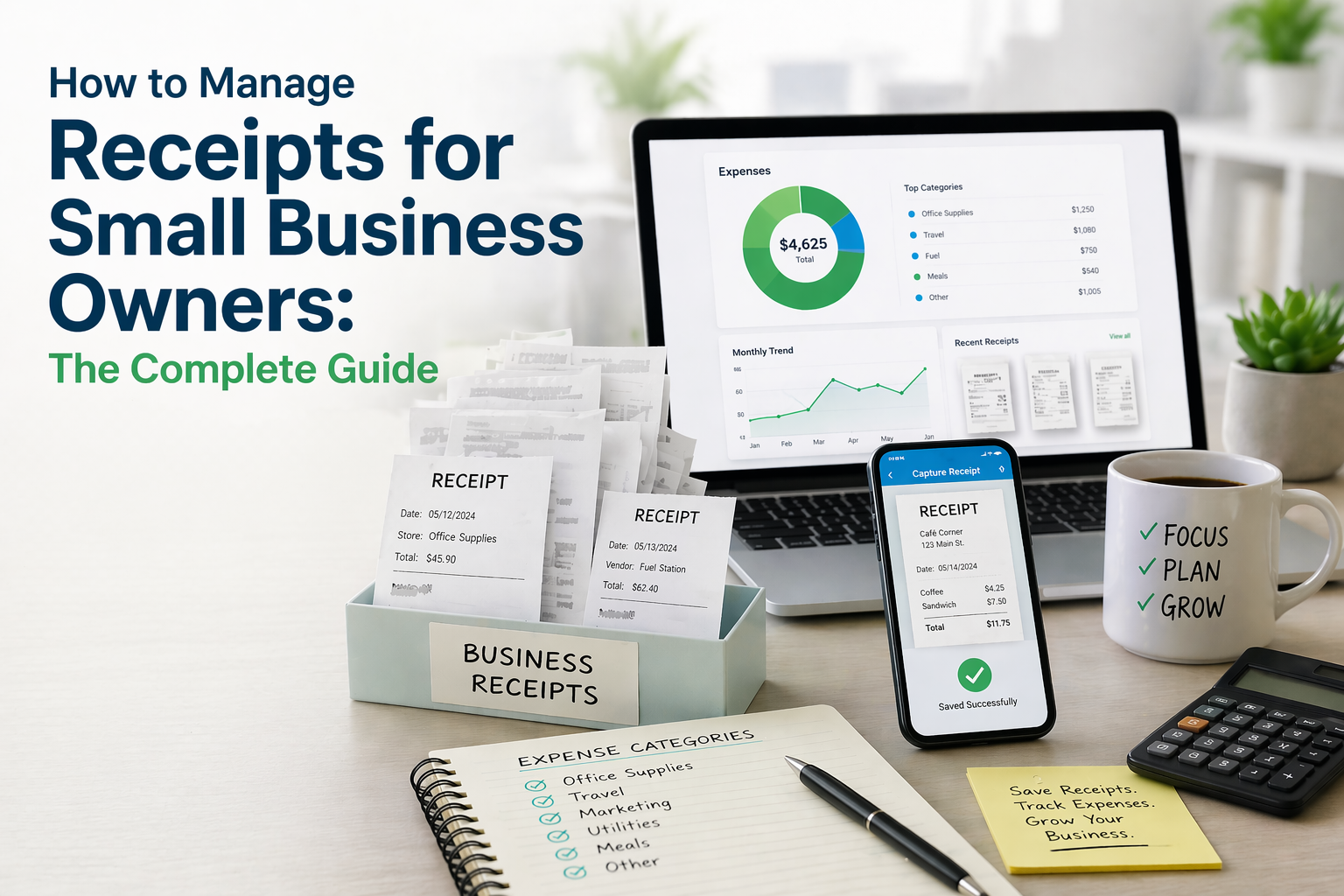
How to Manage Receipts for Small Business Owners: The Complete...
Learn how to manage receipts for small business, organize digital and paper records, and build a simple system for accurate tracking and compliance.
Uploaded on 21 Apr 2026
Best Receipt Organizer Software in 2026 (Features, Benefits, and What...
Explore the best receipt organizer software in 2026, key features to look for, and how to choose the right tool for managing receipts efficiently.
Uploaded on 31 Mar 2026
Start Your Paperless Journey
At Amriop, we’re more than an invoice management software, we’re building a smarter, more sustainable way to handle digital receipts. Whether you want to manage eReceipts more efficiently, adopt electronic receipts to reduce waste, or use secure digital receipt storage, Amriop offers a receipt organizer and receipt management system designed for everyone.
Go Paperless Now