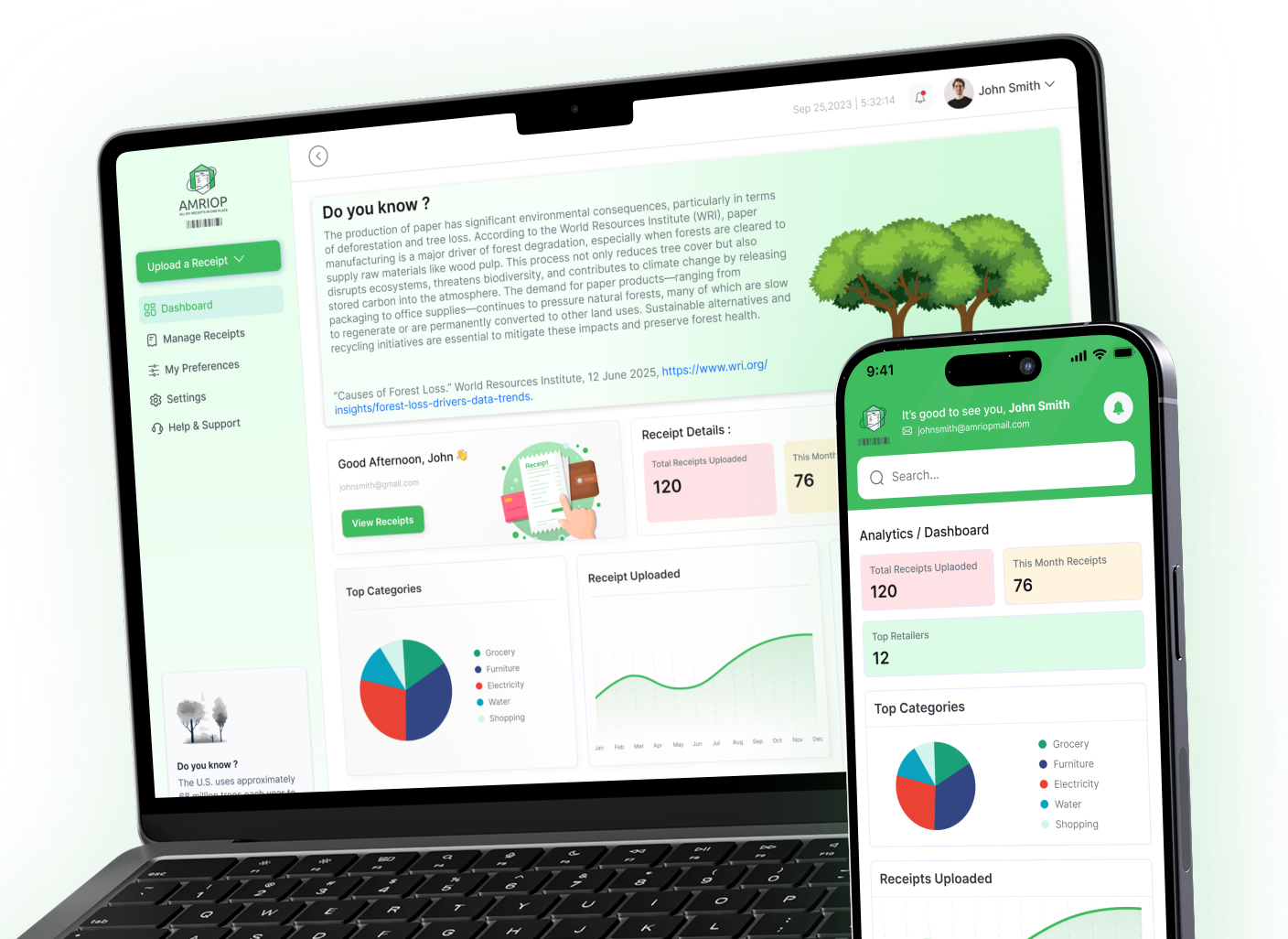
Paper Receipts vs Digital Receipts: Environmental Impact and Why It Matters
Paper receipts create hidden waste and health risks. Digital receipts reduce paper use, cut clutter, and support more responsible, paperless habits.
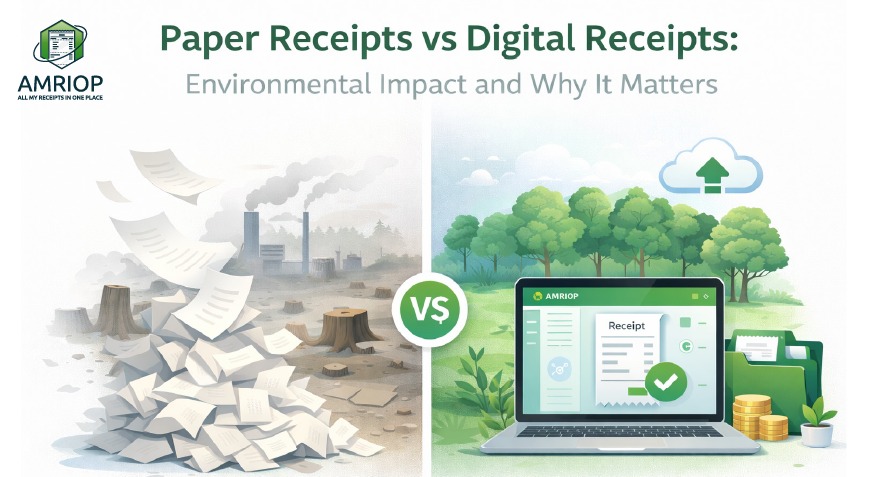
Receipts: An Easily Overlooked Environmental Issue
Every time we buy something, we're given a paper receipt. Grocery stores, fuel stations, cafes, pharmacies. They have all had us print out a receipt without question. We get a receipt, check the payment, and toss the receipt without a second thought.
People don't realize that that many receipts are printed every day. While many are discarded after a quick glance, all of them require paper, ink, and other materials to be printed.
With every single paper receipt printed, a little bit more waste is added to landfills. Most receipts are printed using thermal paper, which is very difficult to recycle and has long-term health impacts from the chemicals that are used in the printing process. Paper receipts are a hidden environmental problem that impacts our health and fills our landfills.
What Paper Receipts Are Made Of (And Why That Matters)
Most of the time, a paper receipt isn't made of ordinary paper. Instead, they are made of thermal paper, which means they use a different method to print text. Instead of using ink to print text, they use a special type of heat to print. On a thermal receipt, a special coating is reactive to heat. When a thermal paper receipt is printed, a receipt printer uses the heat to activate the special coating, which is how it prints the text.
Making a paper receipt this way is fast and cheap. Yet, this also means they can only be used for a short duration of time. Usually, the printed text that is printed using this method can only be read for about 3 months before it begins to fade. If the paper is exposed to heat, moisture, or damage, the text can fade even faster, which means this method of printing is bad for anything that needs to be kept for a long time.
Because of the printed coating that makes thermal printing possible, thermal paper can also not be recycled the same way that standard recycled paper can. Instead of recyclability, the processed material can cause it to be destroyed or sent to an incinerator, which has detrimental effects on the environment for something that is made to be used for a short period of time.
The Environmental Impact of Paper Receipts
By causing the thermal paper to be used repeatedly, the environmental impact will be detrimental to using paper receipts. Paper, energy, and raw materials are all used to print thermal paper. When this same impact is replicated across millions of different transactions, then a huge amount of new raw materials is used up, which isn't good. It is hard to dispose of thermal receipts. It isn't easy to recycle receipts. Receipts end up being thrown away instead of being made into reusable materials. When thrown away, they will either go to a landfill or be incinerated, both of which hurt the environment.
The problem gets worse when considering the volumes of paper receipts that are wasted. Individually, a single paper ticket doesn't seem to make a difference. However, when many of these little items are created and discarded, the effect they have on our planet is substantial.
Health Concerns Linked to Thermal Receipt Paper
The thermal paper of many receipts contains a chemical coating that is printed on using heat, rather than ink. Some of these coatings are made from a chemical compound called bisphenol.
These chemicals are not fused to the paper, and when there is a lot of direct contact, they can transfer to the skin. Most consumers only use receipts once, but retail workers and cashiers handle these papers every single day, and because of that, they are at a higher risk of being exposed to harmful chemicals.
These statements are about the risk of being exposed to chemicals. It is about how often they are exposed to the chemicals, not about making alarming statements.
What Are Digital Receipts?
Digital receipts, also called eReceipts, are a newer way to do business to help protect our environment. Digital receipts are records of transactions that are kept electronically rather than printed on paper. Transactions still include the same details that paper receipts do: the amount purchased, date, confirmation of payment, etc.
Digital receipts do not need to be printed, meaning no paper is wasted, no plastic is being used to make a slip of receipt, and no paper slip can be carried, lost or thrown in the trash. Digital receipts are verified transaction records that do not waste paper.
By not printing a receipt, consumers no longer have to deal with the chemicals that are used to coat the thermal paper printed on receipts. No receipt means no wasted contact with our skin and the thermal paper.
Environmental Benefits of Digital Receipts
Doing business with digital receipts is better for our environment. Every digital receipt that is issued means one less paper receipt that will need to be printed. Less printed paper means fewer trees will be used and fewer resources will be used overall.
We will also be less reliant on the equipment used to print paper receipts. No thermal printers, no paper rolls, and less paper means less fuel is used to power the printing equipment. Another benefit is the elimination of waste from disposable receipts. Receipts are easily thrown away, and they are trash in a couple of minutes. Digital receipts are a better option for the environment because they don't waste paper.
Paperless Receipts and Responsible Consumption
Going with paperless receipts digitally is a great option that a lot of people can take to shop with more responsibility. When you use digital receipts, you are actively choosing to be responsible for the environment and the use of recycled paper. You are responsible and paperless, and you don't even have to change the way you shop to do so.
Adding digital paper receipts to your habit of environmentally responsible shopping is a sign of good habits. Eliminating the need for people to waste and dispose of paper products. Eliminating paper receipts is environmentally responsible.
The small things in our lives, like digital paperless receipts, have large benefits in our world, like reducing the amount of paper that can be thrown away in large quantities.
The Hidden Problem: Digital Receipts Without Organization
The use of digital paperless receipts can solve a lot of problems for the world, but they also have some challenges. People can easily lose digital paperless receipts, and they can begin to overwhelm your computer.
Email is designed for short-term use, not a long-term receptacle. With time, receipts are lost among spam and transactional emails, and are hard to dig up months later. Poorly organised emails, with digital receipts, can be as frustrating as paper receipts.
This is why digital receipts alone are not enough. Losing a digital receipt, with no intentional strategy to retrieve it later, makes digital reimbursements useless.
Why Receipt Management Matters in a Paperless Shift
Over time, digital receipts are useful. Just because a receipt is sent to you digitally doesn't mean that, because that receipt is now paperless, it will not become useless. Just because it is in your email doesn't guarantee usability.
There is a difference between short-term and long-term access. If a digital receipt is not strategically stored, you will have no way to access it down the road. On the other hand, if a receipt is strategically stored, you will have access to it whenever you need.
Receipt management is the tool that allows a digital paperless system to be shift usable.
How AMRIOP is Suited to this Transition
The transition from paper receipts to digital receipts structures a need, and this is where AMRIOP, a digital receipt management system, fits into the process.
AMRIOP aims to make organizing your digital receipts in a single app system instead of having them scattered throughout emails and other locations. By organizing digital receipts, AMRIOP provides a way to transform digital records into reliable, trustworthy information.
AMRIOP encourages and supports responsible paperless habits. It helps to keep receipts, reduce environmental waste, reduce expensive paper purchases, and ensures receipts are easily accessible and useful.
Why This Transition Matters Now
The environmental and health impacts of paper receipts do not appear instantly. They build slowly but surely over time as paper consumption, waste generation, and chemical exposure build up over large numbers of transactions.
Out of every source of everyday waste, receipts are one of the most easily manageable and controllable. Decreasing the amount of paper receipts does not call for significant lifestyle changes and fits easily into any and all daily routines.
The right combination of digital receipts and effective receipt management systems has a noticeable positive impact. The paper waste and physical waste are reduced and limited, reducing the impact of harmful thermal paper.
Conclusion: Small, Practical Changes That Scale
Each receipt seems unimportant in the grander scheme of things. They are tiny, used once, and are super easy to overlook.
However, when looked at from a different perspective, receipts are impactful on a larger scale. They impact the environment. Millions of single-use, disposable products are created and thrown away, negatively impacting our planet.
Digital receipts are a good way to save the environment by wasting less paper and helping people manage how much they are spending. If you combine digital receipts with good management, you will have a great solution for a sustainable future.
Related Blogs
View all the related blogs from here
How to Go Paperless at Home: Receipts, Bills, and Documents...
Stop drowning in paper clutter. Learn how to digitize your receipts, bills, and documents at home — and keep them organized for good.
 Uploaded on 30 Apr 2026
How to Store Your Digital Receipts So They’re Secure and...
Learn how to store digital receipts safely, organize them properly, and keep purchase records accessible for returns, warranties, and taxes.
Uploaded on 03 Mar 2026
What Is Receipt Management? Definition, Importance, and Best Practices
Receipt management is the practice of organizing paper and digital receipts so they remain accessible for returns, warranties, taxes, and everyday financial cla...
Uploaded on 26 Feb 2026
Start Your Paperless Journey
At Amriop, we’re more than an invoice management software, we’re building a smarter, more sustainable way to handle digital receipts. Whether you want to manage eReceipts more efficiently, adopt electronic receipts to reduce waste, or use secure digital receipt storage, Amriop offers a receipt organizer and receipt management system designed for everyone.
Go Paperless Now